8 Steps to Prepare a Soil-Less Growing Medium
The weight of a cubic yard of peat-based growing mix sits at roughly 1,200 pounds when saturated, yet commercial growers routinely move tens of thousands of pounds through their facilities each week. Learning how to prepare a soil-less growing medium transforms basement hobbyists into precision cultivators who manipulate root-zone chemistry with the same confidence that field farmers read soil test results. The substrate you build determines oxygen availability, cation exchange capacity, and the speed at which roots colonize their container.
Materials
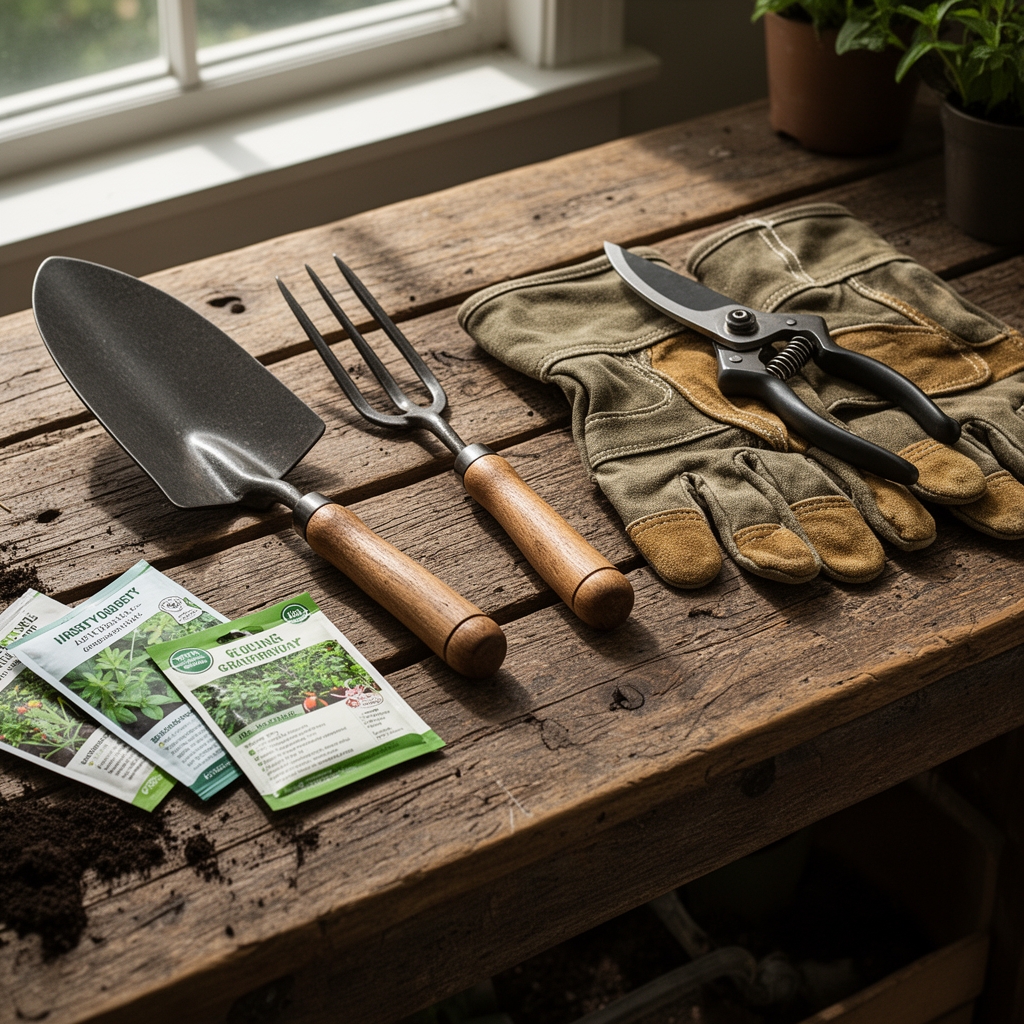
Base your selection on the target pH and the crop's nitrogen demand. Sphagnum peat moss provides a natural pH of 3.5 to 4.5 and requires 5 to 7 pounds of dolomitic limestone per cubic yard to reach pH 6.0. Coir pith registers at pH 5.5 to 6.8 and carries a cation exchange capacity of 60 to 130 meq/100g, nearly double that of peat.
Perlite grade 3 (medium) offers 50% air-filled porosity when mixed at 20% by volume. Vermiculite holds three to four times its weight in water and releases potassium and magnesium slowly as roots acidify the rhizosphere. Coarse pine bark fines (3/8 inch minus) require nitrogen supplementation because lignin decomposition immobilizes 0.5 pounds of nitrogen per cubic yard per month.
For fertility, incorporate a 4-4-4 all-purpose organic meal at 2 pounds per cubic yard for low-demand crops such as lettuce. Tomatoes and peppers require 5-3-4 formulations at 3.5 pounds per cubic yard to support fruit set. Add mycorrhizal inoculant at 1 ounce per 5 cubic feet of mix to colonize roots within 14 days of transplant.
Timing
In USDA Hardiness Zones 5 through 7, prepare soil-less media indoors 4 to 6 weeks before the last spring frost date. Seeds sown in 72-cell plug trays need 10 to 14 days for germination at 70 to 75 degrees F, followed by 3 weeks of vegetative growth before hardening off begins.
Zones 8 and 9 allow year-round production with artificial supplemental lighting during the 9-hour day length of December and January. Fall sowings in Zone 6 must occur by August 15 to allow 60 days of growth before night temperatures drop below 50 degrees F and slow root development.
Mix components 48 hours before seeding to allow limestone to react with acidic peat and stabilize pH. Wetting agents require 24 hours to coat hydrophobic peat particles and reduce initial irrigation volume by 30%.
Phases

Sowing Phase
Fill seed trays to within 1/4 inch of the rim and firm gently to eliminate air pockets that cause uneven moisture distribution. Surface-sow pelleted lettuce seed at one seed per cell. Cover tomato seeds with 1/4 inch of vermiculite to retain moisture while allowing light penetration for thermodormancy breaking.
Maintain substrate temperature at 72 to 75 degrees F using bottom heat mats that deliver 15 watts per square foot. Mist twice daily until radicle emergence, then reduce to once daily to encourage deeper rooting.
Pro-Tip: Add Trichoderma harzianum at 10^6 CFU per gram of media to colonize the seed coat and prevent Pythium damping-off without fungicide drenches.
Transplanting Phase
Transplant when true leaves fully expand and roots form a visible mat at plug edges, typically 18 to 21 days post-germination for brassicas. Pre-moisten 4-inch pots to field capacity, then create a planting hole equal in depth to the plug height.
Position the plug crown level with the media surface except for tomatoes, which benefit from burial to the cotyledon node to promote adventitious rooting along the stem. Firm media around the root ball with 2 pounds of pressure to eliminate voids.
Pro-Tip: Drench transplants with a kelp solution containing 0.1% cytokinin to reduce transplant shock by 40% and accelerate lateral root initiation within 72 hours.
Establishing Phase
Monitor electrical conductivity weekly using a pour-through method. Target 1.0 to 2.0 mS/cm for vegetative growth and 2.5 to 3.5 mS/cm during flowering. Substrate pH drift occurs as roots exude organic acids; recheck every 10 days and apply potassium bicarbonate at 0.5 grams per gallon if pH falls below 5.8.
Increase light intensity from 200 to 400 micromoles per square meter per second over 7 days to prevent etiolation while building chlorophyll density.
Pro-Tip: Prune lateral shoots at a 45-degree angle 1/4 inch above the node to maximize auxin distribution toward terminal buds and avoid pathogen entry points that plague flat cuts.
Troubleshooting
Symptom: Interveinal chlorosis on new growth with leaf tip burn.
Solution: Iron deficiency induced by pH above 6.8. Drench with chelated iron (Fe-DTPA) at 2 ounces per gallon and lower pH to 6.2 using sulfuric acid at 0.2 ml per gallon.
Symptom: Wilting despite adequate moisture and white fungal mats at the stem base.
Solution: Rhizoctonia crown rot. Remove affected plants, reduce irrigation frequency by 30%, and apply Bacillus subtilis at 10^8 CFU per ml as a preventive drench.
Symptom: Purple undersides on leaves with stunted growth.
Solution: Phosphorus lockout from cold substrate below 60 degrees F. Raise root-zone temperature and foliar-feed with monoammonium phosphate at 1 teaspoon per gallon.
Symptom: Algae growth covering media surface with fungus gnat larvae present.
Solution: Overwatering and excessive nitrogen. Allow top 1 inch to dry between irrigations and apply Steinernema feltiae nematodes at 50 million per 1,000 square feet.
Maintenance
Irrigate when the container weight drops to 60% of field capacity, approximately every 2 to 3 days in 70-degree F ambient conditions. Apply 1.2 inches of water per irrigation event to achieve 10 to 15% leaching fraction and prevent salt accumulation.
Feed with 150 to 200 ppm nitrogen from calcium nitrate and potassium nitrate at every irrigation during vegetative growth. Reduce nitrogen to 100 ppm and increase potassium to 250 ppm during reproductive stages to enhance fruit quality and Brix levels.
Recharge cation exchange sites monthly with a solution containing 100 ppm calcium and 50 ppm magnesium from soluble sulfate sources to prevent micronutrient antagonism.
FAQ
Can I reuse soil-less media for multiple crops?
Sterilize used media by heating to 180 degrees F for 30 minutes to eliminate root pathogens. Replenish with 20% new peat and 2 pounds of 5-3-4 fertilizer per cubic yard.
What is the ideal perlite-to-peat ratio?
Use 70% peat and 30% perlite for moisture-loving crops. Reverse to 30% peat and 70% perlite for succulents requiring rapid drainage and air-filled porosity above 40%.
How long does soil-less media remain viable in storage?
Dry media stored in sealed bags maintains structure for 18 months. Pre-moistened media develops anaerobic conditions within 3 weeks, producing hydrogen sulfide and phytotoxic organic acids.
Do I need to adjust fertilizer rates for coir versus peat?
Coir binds calcium and magnesium more strongly than peat. Increase calcium nitrate application by 25% and supplement with magnesium sulfate at 50 ppm to prevent deficiencies.
When should I replace growing media entirely?
Replace after physical breakdown reduces air-filled porosity below 10%, typically after 12 to 18 months of continuous cropping with weekly fertigation.