9 Best Tweezers for Precise Terrarium Maintenance
Planting a microfern into a narrow-necked glass vessel without crushing its rhizome or smearing soil across the interior walls demands precision engineering. The best tweezers for terrarium plant placement bridge the gap between surgical instrument and horticultural tool, allowing you to position delicate mosses, liverworts, and seedlings without disturbing substrate stratification or damaging meristematic tissue. Standard kitchen tweezers lack the length, tip geometry, and grip control necessary for reaching through a four-inch opening to anchor a Selaginella cutting twelve inches below.
Materials
Tweezers for terrarium work fall into three metallurgical categories: stainless steel alloys (typically 304 or 316 grade), titanium alloys, and carbon steel with anti-corrosion coatings. Stainless steel resists the acidic environments common in sphagnum-based substrates (pH 4.5 to 5.5) and tolerates repeated sterilization in 70% isopropyl alcohol. Titanium variants weigh 40% less than steel equivalents, reducing hand fatigue during extended planting sessions, but cost three times as much. Carbon steel models offer superior spring tension but corrode when exposed to high-moisture environments unless treated with titanium nitride coatings.
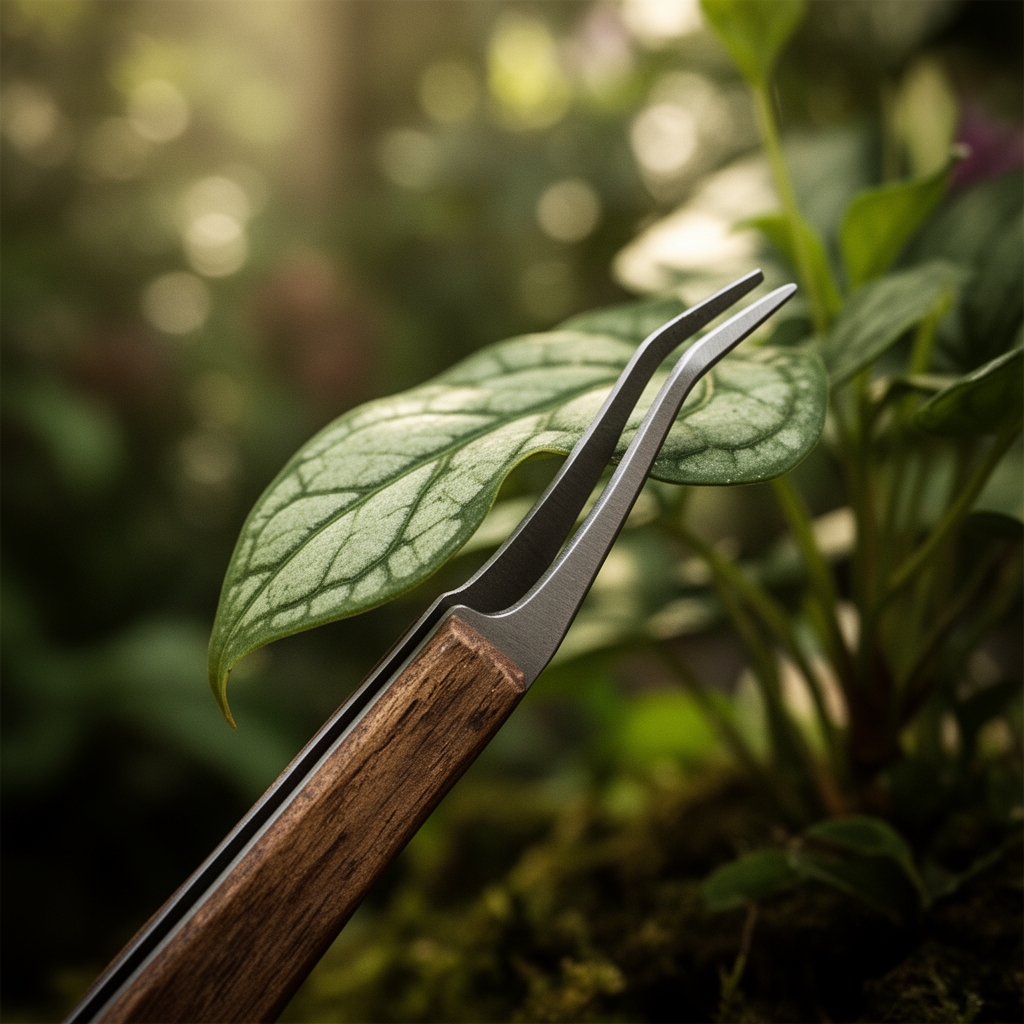
Length determines accessibility. Models between 10 and 12 inches reach the base of standard cylindrical terrariums. Longer 15-inch variants access bottle gardens and carboy conversions. Tip geometry varies by task: straight fine-point tips (0.3 mm precision) handle moss fragments and Fittonia runners; angled tips at 45 degrees improve sightlines when working near vessel walls; curved tips cradle root balls during transplanting without applying crushing pressure to cambial tissue.
Substrate interaction matters. When working with mineral-rich mixes (NPK ratios around 2-1-2 for slow-release nutrition), tweezers must not introduce metallic ions that alter cation exchange capacity. Stainless steel and titanium remain inert. Avoid zinc-plated tools, as zinc leaches into acidic media and reaches phytotoxic concentrations above 150 ppm.
Timing
Terrarium planting occurs year-round in controlled indoor environments, but plant selection follows natural dormancy cycles. Temperate species like Hepatica nobilis establish best when sourced during spring growth flushes (USDA Hardiness Zones 4 through 8, typically March through May). Tropical species show no dormancy and transplant successfully in any season, provided ambient temperatures remain between 65 and 75 degrees Fahrenheit.
Frost dates become relevant only when collecting wild specimens. In Zone 6, the last spring frost averages April 15. Harvest mosses and ferns two weeks after this date, when soil organisms have resumed metabolic activity and mycorrhizal networks have re-established hyphal connections. Autumn collection works equally well between September 1 and the first hard freeze, usually October 20 in Zone 6.
Phases

Sowing Phase
For propagule placement (spores, gemmae, or micro-divisions), use fine-point tweezers with 0.5 mm tips. Sterilize tips in flame or 70% alcohol for fifteen seconds before each specimen to prevent cross-contamination of fungal spores. Position propagules directly onto pre-moistened substrate rather than embedding them. Moss spores require light for germination; covering reduces success rates by 60%.
Pro-Tip: Dip tweezer tips in rooting hormone powder (0.1% indole-3-butyric acid) before handling stem cuttings. Auxin residue transfers to cut surfaces, accelerating adventitious root formation by 4 to 7 days in tropical species like Pilea glauca.
Transplanting Phase
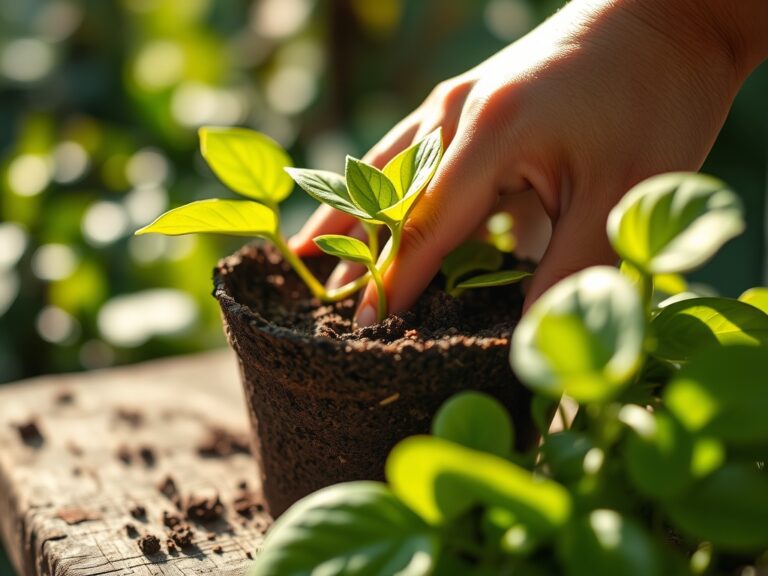
Grasp plants by the root ball or lower stem, never by apical meristems or new growth. Compression injury to actively dividing cells causes necrosis visible within 48 hours as browning at contact points. Excavate planting holes with the tweezer tips closed, then use them as spreaders to widen the cavity. This method prevents substrate compaction that restricts oxygen diffusion to roots.
For epiphytic species (Tillandsia, Neoregelia), use angled tweezers to wedge root masses into cork bark crevices. Apply 2 psi of pressure, equivalent to the weight of a quarter resting on the root crown.
Pro-Tip: Inoculate transplant holes with 0.25 grams of ectomycorrhizal fungi per plant. Use tweezers to blend inoculant into the bottom third of the hole before inserting roots. Colonization improves phosphorus uptake in low-nutrient glass environments by 35%.
Establishing Phase
Post-planting, use tweezers to position decorative elements (stones, driftwood) without disturbing root zones. Maintain a 1-inch exclusion radius around each plant's crown. Organic top dressings (shredded sphagnum, fine bark) should be 0.125 inches thick, applied with tweezers to avoid smothering low-growing liverworts.
Pro-Tip: Prune damaged foliage at 30-degree angles using tweezer tips as makeshift shears. Angled cuts shed condensation and reduce fungal entry points compared to perpendicular cuts.
Troubleshooting
Symptom: Leaf edges browning within 72 hours of planting.
Solution: Transplant shock combined with low humidity. Increase vessel humidity to 80% by reducing ventilation. Avoid misting directly onto foliage; instead, add 0.5 fluid ounces of water to substrate perimeter.
Symptom: White fungal threads on substrate surface.
Solution: Saprophytic mycelium, not pathogenic. Indicates healthy decomposition of organic matter. Remove only if it climbs plant stems, using tweezers to lift and extract hyphal mats without disturbing roots.
Symptom: Plants topple over 5 to 7 days post-planting.
Solution: Insufficient root-to-substrate contact. Excavate with tweezers and replant 0.25 inches deeper, ensuring root hairs contact mineral particles for anchorage.
Symptom: Algae coating glass interior near soil line.
Solution: Excess light and nutrient leachate. Reduce photoperiod to 10 hours daily. Use tweezers to remove algae physically; chemical controls alter substrate pH.
Symptom: Springtails visible on soil surface.
Solution: Beneficial decomposers, not pests. Population exceeding 50 per square inch indicates overwatering. Reduce moisture by 20%; springtails regulate naturally.
Maintenance
Water terrariums every 14 days, adding 1 to 2 fluid ounces depending on vessel volume (1 ounce per 50 cubic inches of substrate). Use tweezers to part foliage and direct water to substrate, avoiding crown rot in rosette-forming species. Prune dead material monthly; decomposition in closed systems produces ethylene gas that accelerates senescence in neighboring plants.
Fertilize quarterly with diluted liquid fertilizer at one-eighth package strength (NPK 3-1-2 for foliage emphasis). Apply 0.5 fluid ounces per vessel using a pipette, then use tweezers to gently cultivate the top 0.25 inches of substrate, incorporating nutrients without damaging shallow feeder roots.
FAQ
What length tweezers work best for standard jars?
Ten-inch straight tweezers access the base of vessels with 4-inch openings and 10-inch depths without hand contact with glass.
Can I sterilize tweezers between plants in one session?
Yes. Flame-sterilize for 8 seconds or wipe with 70% isopropyl alcohol for 15 seconds. Air-dry for 30 seconds before contacting live tissue.
Do angled or straight tips perform better?
Straight tips offer maximum reach; angled tips improve visibility in dense plantings. Own both types for different scenarios.
How much pressure prevents root damage?
Apply pressure equivalent to holding a potato chip without breaking it, approximately 1 to 2 psi. Excessive force crushes vascular bundles.
Should tweezers have serrated or smooth tips?
Smooth tips prevent tissue tearing. Serrations grip hardscape materials (stones, wood) but shred delicate plant epidermis on contact.